Friday, November 29, 2013

2H2K - May 2050 - JailbiRd

Eastern State Penitentiary (1829-1971) via Wikipedia
[This is the fifth short story in a series, the 1st story is here, the 2nd is here, the 3rd is here, the 4th here.] 
The subway car was packed with campers heading for a day beach. The kids were rowdy, moving back and forth, yelling at one another in their excitement. Dean had gotten a seat at the end of the row closest to the door. This meant his back was against the side of the subway car, which was fine. But it also meant the the two boys to his right, whose seats were facing the back of the car, were crowding him with their knees. The boys were playing some sort of game that had them both slouched, jerking unpredictably, and waving their hands almost constantly.

2H2K - May 2050 - Decayed Roués Robots: An Introduction

Lumpenproletariat according to Akira Kurosawa and The Economist
  
Years ago I went with a group of mostly french friends to see a performance of Charles Aznavour, a French crooner of Armenian extraction who is best described as the French Frank Sinatra. One of the guys with us that night was from the Armenian consulate and when Aznavour announced he was going to sing about his homeland, our Armenian friend stood and with the other Armenians in the audience, went wild. Not to be out done, when Aznavour introduced a song about Paris my expat Parisian friend, and the other displaced Parisians filling the hall, stood and sent up a great cheer. A little while later Aznavour explained that his next song was about "the love that dare not speak its name" - and a gay couple in our row stood and loudly cheered. Everyone smiled. Finally Aznavour announced that he would sing his song La Bohème about struggling artists, and I stood, all alone and cheered. My friends, the gay guys, and everyone around us looked at me like I was a little nuts. Which was just about right. We have always been a marginal group at best, but as we look forward to the "end of work" - or as it is more recently been dubbed, "the end of jobs" - the Bohème may become a force for change - not as a heroic avant-guard leading the Proletariat to violent revolution against their Capitalist overlords, but something more akin to the growth of the Petite Bourgeoisie consumer class - aka the middle class - during the Post War years.

Wednesday, November 13, 2013

New Ideas Need Tall Buildings: Gentrification vs Integration - Flying Wedges vs Rooted Anchors

Alfredo Brillembourg presenting Torre David at this year's CTsummit

Last week I wrote a post for ArtFCity titled "A Look at The Creative Time Summit: Gentrification, Gentrification, and Gentrification." I was asked to do something relatively short and straightforward but managed to write myself into a corner, turning the post into something long, difficult, even a little scary. "Gentrification" is an umbrella term that covers a constellation of assumptions and biases - the great majority of which I find wrong-headed and vexing. According to Wikipedia, the term "gentrification" was coined by the British sociologist Ruth Glass in 1964. That it is a derivative of "gentry," itself, clearly signals that ownership was core to its original meaning. It was used by Glass to refer to the threat posed to lower-class worker residents, who depended on public housing, by the then fast-growing middle-class residents who, increasingly, could afford to own housing. Gentrification names a brand of class conflict, not an invasion of a bourgeois horde. But not surprisingly Americans have ever used the word gentrification the way the Brits originally intended. In the US race has always been a stand in for class. So US speakers use "gentrification" as a coded way to say "white people" much the same way they use "urban" as a coded way to speak of "black people." And like all coded language, the term "gentrification" obscures and disguises more than in communicates.

Thursday, October 31, 2013

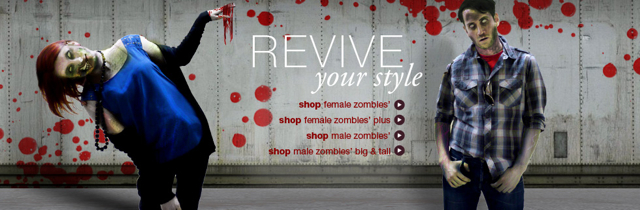
Zombie Popularity

Sears launches Zombie Shopping Department. via Laughing Squid

I was interviewed about The Political Economy of Zombies today and was asked why I thought zombies are so popular now. I suppose I should have been prepared for that question, but it's not something I tried to explain in my essay (or the intro), It didn't even occur to me explain it to myself - I was more concerned with what it meant, not why it was happening - and I think those are two different things. Zombies are grotesque, morbid, and in-and-of -themselves, dull (one might say lifeless). So asking why they are so popular is seems worth thinking about.

Friday, October 18, 2013

2H2K - April 2050 - tuRing

People's Meeting Dome - Kristoffer Tejlgaard and Benny Jepsen
[This is the fourth short story in a series, the 1st story is here, the 2nd is here, the 3rd is here] 
 David was uncrating a crew of carpenteRs when he heard a child laughing behind him. Before he could stop himself, he turned and looked for the little girl his ears were telling him was standing behind him in the yard. By the time he realized that he had once again been chumped by the Cardiff ringtone, he was staring at the empty space where the girl should be. Not only were his ears telling him exactly where she was standing (a bundle of PVC conduit where the water and electric emerged from the cement slab foundation), but the sound of the girl’s laugh allowed him to picture exactly how tall the little girl would be. It creeped him out.

2H2K - April 2050 - Robots are Marxist: An Introduction

First horseless carriage in Vancouver (1899)

"Can't get there from here" is the punch line of an old joke about a driver asking a farmer for directions (my father used to tell it, with great effect, using a thick New England accent). There is, in linguistic circles, a question of whether or not there are certain ideas that can't be conceived of without the language needed to describe them, having been developed in advance. Call it a cognitive chicken-and-egg, can't get there from here, conundrum. As I began thinking about what city life might be like in the year 2050, I found myself wondering how people will speak of robots when everything is a robot. Just as we no longer refer to "horseless carriages," I don't expect anyone to refer to "driverless automobiles" forty years from now. Rather than invent a new word (carbot? cardroid?) or repurpose an old one (automatautobot?) I decided instead that it made more sense to invent a new way of speaking; to have English speakers use tone to change meaning: so a driverless car became a caR, a robotic carpenter became a carpenteR, and an automated operator - like the kind we interact with more and more today - became an operatoR. What ended up happening is that my mind went in an entirely unexpected direction. Instead of thinking about questions of Artificial Intelligence, I found myself wondering about Artificial Labor. The difference is subtle but turned out to be helpful making the leap past the naysaying Yankee.

Monday, October 14, 2013

Robert Kirkman: Zombie Utopian

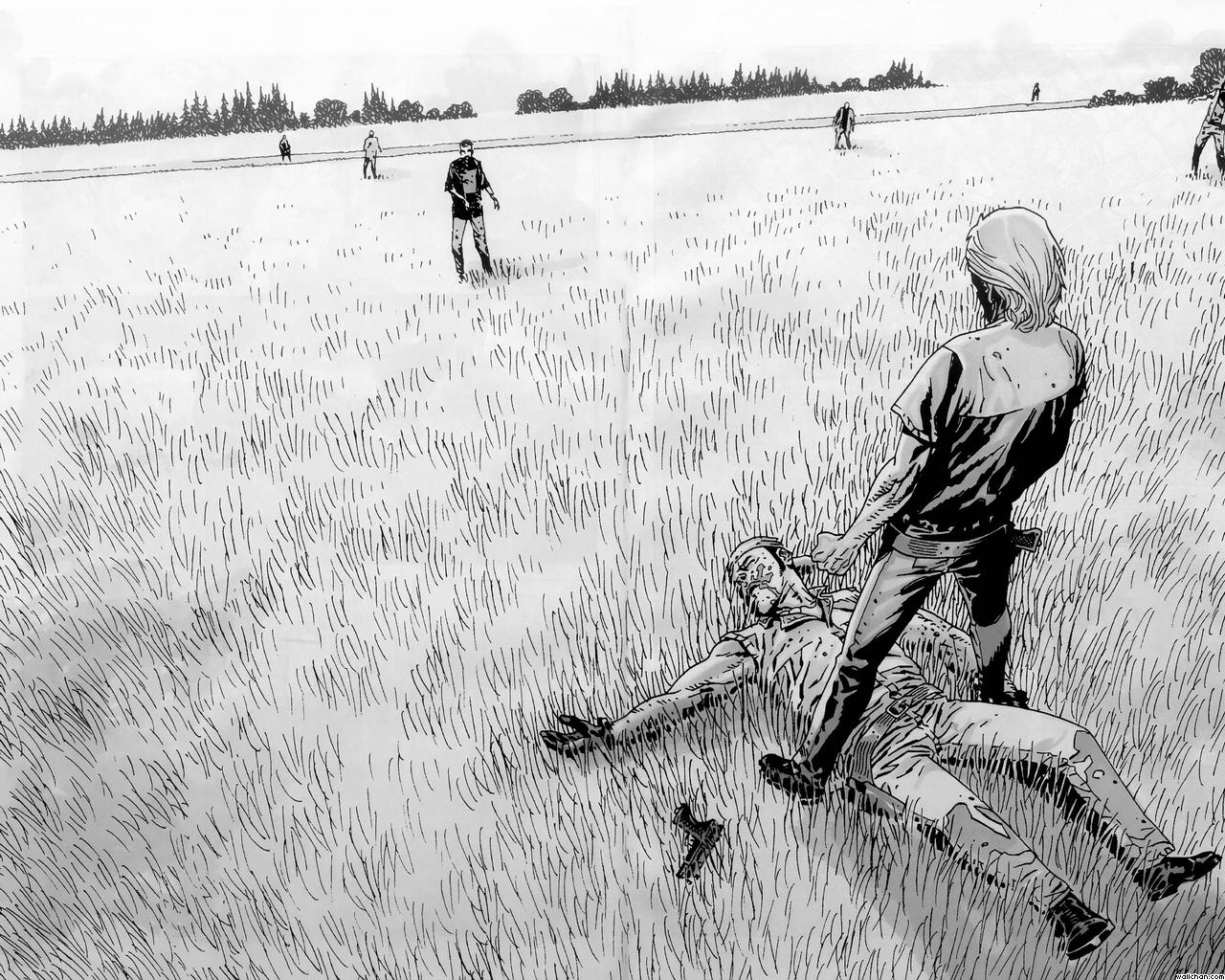
The Walking Dead as drawn by Robert Kirkman via Wikia

I am vindicated, or at least justified, or perhaps I've just had a bias confirmed. A friend of Felix Salmon's forwarded on this quote from a Rolling Stone interview of Robert Kirkman; the artist who created the original Walking Dead comic book and also writes for the TV series:
Sometimes I think about how life now is not cool. We made a mistake at some point in our history, a hundred years ago, when we were living in houses that we built, growing food that we ate, interacting with our families and living our lives. Looking back on that era, it seems kind of appealing. That's a life that makes sense. Now, we're doing jobs that we don't enjoy to buy stuff that we don't need. I don't mean to sound like Tyler Durden, but it seems like we've screwed things up. There doesn't seem to be any kind of movement to continue evolving how we live, who we are and what our purpose is as human beings. That's unfortunate. So it's fun to look at the world of The Walking Dead and see those things taken away. Is life going to be better? A lot of people think the show is very bleak and depressing. And it is, oftentimes. But I can see where the story is going to go in the next ten years, and I think about it optimistically. Maybe it's going to make us better people by the end of it.
As I explained in my Introduction, there was a lot of material I'd have liked to include in The Political Economy of Zombies, and couldn't. But when I was writing the essay I did make an effort to track down a copy of The Walking Dead, I was curious to read it, had heard good things, but I was upstate staying at a cabin at the time, no comic book stores. I now feel honor bound to buy the book - but even if I didn't, I would. Kirkman sounds like a interesting guy, with an amazing project. "I'm 34 years old. By the time I'm 65, I might actually get pretty far." Kirkman says. "There could be an issue 700 of The Walking Dead that's about people delivering mail. That is exciting to me." - That's exciting to me too. I admire that kind of life-long fidelity to an artistic project, especially a utopian one.

Wednesday, October 2, 2013

2H2K - March 2050: WildcRaft

Boston Dynamic's "Big Dog"

[This is the third short story in a series, the first story is here; the second is here]
  “What’s it called again?” Little Jo asked.
E.J. had turned away. The back of his t-shirt was printed with the slogan “laboR wants to be FREE.” He wore baggy jean, that looked like they hadn’t been washed in weeks and heavy boots made of thick leather, or something very much like it. He was using the his heel of his boot to roll the next log out of the tall grass. Once there was enough room on either side to plant his feet, he lifted the –
“It's a ‘godevil’ or a ‘splitting maul,’” he told her, without looking back. He sounded a bit peeved at being interrupted. Jo smiled and made a sound of approval. She had gone off topic, and interrupted his train of thought, she knew what to expect. E.J. would take his time before returning to the subject. Go ahead, she thought, have a good sulk. Her smile widen.

2H2K - March 2050 - Automation & Feminization: An Introduction

Interior of Amazon’s giant "fulfilment centre" (Photo by Ben Roberts) via James Bridle

Besides the trends of population growth and urbanization that have defined modernization - that perhaps are modernization, two other trends have ghosted the swelling of our global population and our cites; automation and feminization. Trends that started very gradually in the later Middle Ages and in the past fifty years have flowered into the promise of Artificial Intelligence and Feminism. That may sound to some like an arbitrary matching as well as a horribly mixed metaphor (to flower is to deliver on the promise of the bud, after all), but I'll argue that it's neither. Automation begins with relieving workers from drudge work. Though we see Hollywood images of oiled, muscle bound slaves, pulling things with ropes, the greater burden of drudge work has always been borne by women. We have both AI and Women's Liberation, and both remain a promise yet to be fulfilled.

Friday, September 27, 2013

2H2K - February 2050: The Slab

“The Falls” at Lake Las Vegas, Henderson, Nevada (2011). [Photo by Michael Light] via Design Observer

[The following is the 2nd short story in a series, the overall project is introduced here; the first story is here; the third is here]
David felt like he had an iron bar passing latterly through his chest. The bar wasn't a romantic metaphor, it was a feeling. Closing his eyes, it took shape; about as big around as his heart, and heavy. David could feel the bar’s weight, as clearly as if it were held in his hand. The most gruesome part of the bar was it’s length. It was longer than his chest was wide. Long enough that the bar extended beyond his body, protruding invisibly through his biceps. Like Frankenstein's neck bolts writ large, he thought. David knew what it was: a chill. In his mind's eye he saw it extending from the sides of his arms as two cylinders. He felt it pulling warmth from his heart, radiating it uselessly into the desert air.

2H2K - February 2050 - And its Discontents: An Introduction

Abandoned Spanish housing estates (Photographs by Simon Norfolk/Institute) via The New Yorker
[Part 2/12 - Return to Part 1/12]

I like to date the beginning of modernity to August 3rd, 1492 - the sparking of the Colombian Exchange that Charles C. Mann writes about in his 1st and 2nd books so persuasively. This was the moment when the relatively densely urbanized Europeans made contact with the long isolated Americas, and set off a global trade in plants, animals, diseases, technologies, and ideas. Many of the founding works of modernity were laid down in the opening years of the Exchange: Michelangelo’s David (1504), Machiavelli’s The Prince (1513), Sir Thomas Moore's Utopia (1516), and Martin Luther’s Ninety-Five Theses (1517). It was the moment that gave rise to the densely urbanized world we live in now. And 2050 is the moment that will give rise to what comes next, what comes after modernity.

Thursday, September 26, 2013

2H2K - January 2050: LoaneRs

Carnegie Library (1913)
 
[The following is the first of 12 short stories, introduced here.]
 
Little Jo watched David as he barked commands at a cloud of invisible avataRs - or at least invisible to her. Her phone was dead, the only image she could see in her frames was a light indicating that they were searching for a connection. Little Jo couldn’t see what her fiancé was hearing or see what he was seeing; but she could imagine: the persistently polite, but helpless, scrum of telleRs, cashieRs, and operatoRs. And even though she couldn’t see his face from where she was standing, David’s frustration filled the large front room of the rental shop.